| Modulowo Explore E |
Home » All posts
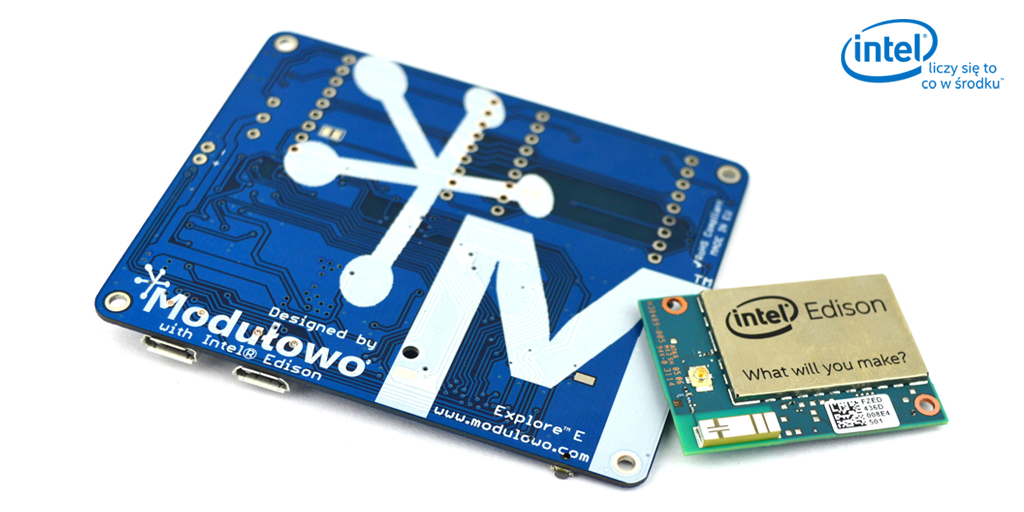
Poland Firm Creates Dev Board For Intel’s IoT Module
Cisco Invests in IoT-in-the-cloud Firm
Wireless Cars Must make Test Connection, Says Keysight
Connected cars with wireless communications links, telematics and vehicle advanced driver assistance systems (ADAS) will require increasing levels of electronic test, write John Russell, Bill Mckinley and Matt Hodgetts
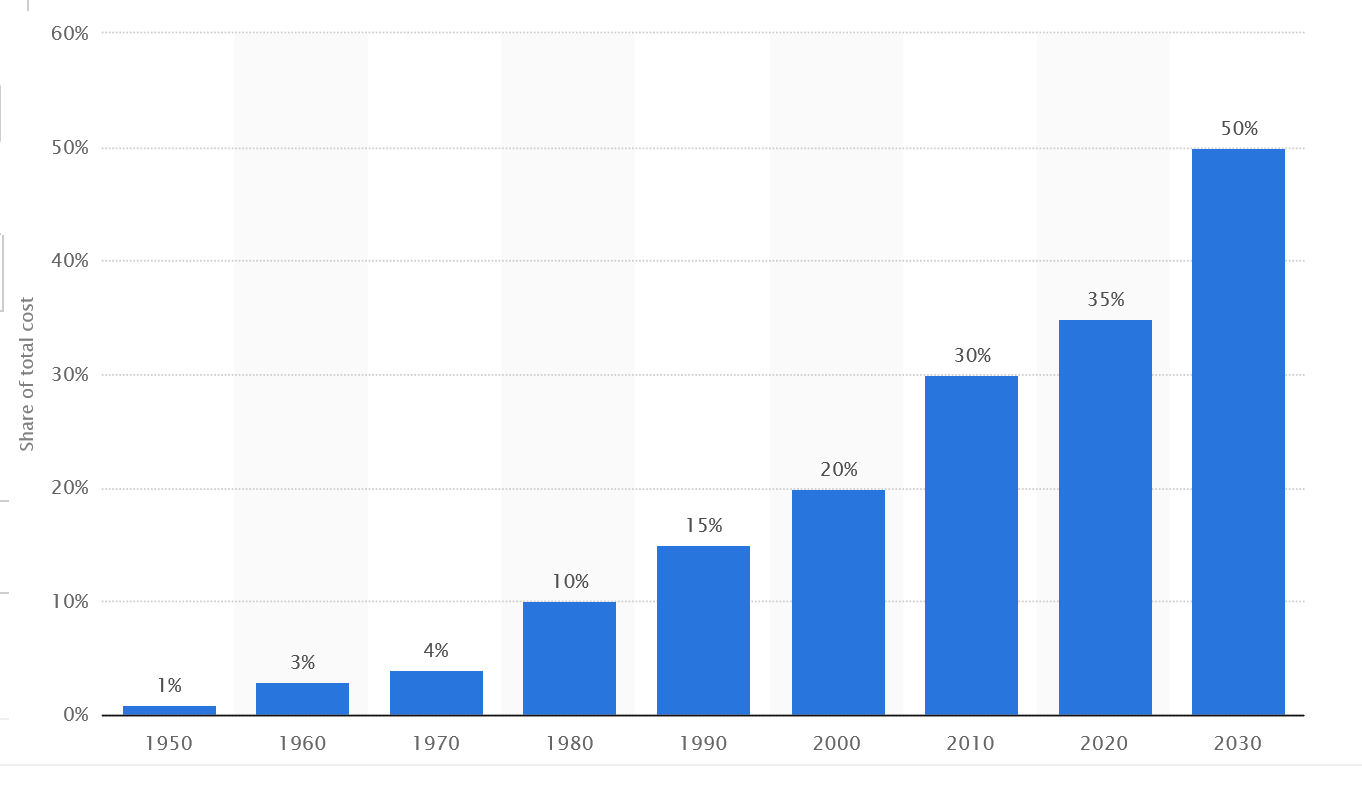
| Figure 1 gives an idea of how the percentage that the electronics content contributes to the total cost of a car has been steadily rising, and is expected to keep rising. |
The technological sophistication of modern automobiles means that they are very different from the models of the past.
In many areas conventional mechanical systems have been replaced by sophisticated electronics. This is allowing substantial improvements in their operational efficiency, as well as enabling a wider range of new features and functionality to be benefited from.
In many ways the cars that are being introduced onto the market today have much more in common with computing devices than they do with their predecessors. They will, in some cases, need to process in excess of 25Gbyte of data per hour in order to fulfil all their assigned tasks.
Until now the impetus for implementing digital technology into automotive designs has been mainly for the purpose of eliminating mechanical elements. Through this, marked reductions in vehicle weight are now happening, which in turn improves fuel economy figures.
This is just one aspect. Vehicle manufacturers are moving ever closer to their goal of the ‘connected car’. Such vehicles will integrate systems supporting a broad array of different communication technologies - and through these it will be possible to address issues relating to driver/passenger comfort and safety, as well as vehicle security.
It will also make it easier to ensure the vehicle is kept in good working order and that maintenance/repair requirements are identified in a timely manner.
Industry analysts firm Gartner has forecast that by 2020 there will be over 250 million connected cars on our roads. These vehicles will employ various different wireless protocols. These include Wi-Fi, LTE mobile, Bluetooth, NFC and ZigBee, to name just a few.
This presents vehicle manufacturers and their technology partners with a sizeable and multifaceted challenge. Not only do they need to derive an accurate benchmark of each of these protocols in isolation, on top of this they must gain a firm grasp of how the wireless signals will interact with one another and also what influence the extremely difficult automotive environment in which they are located is likely to have on performance.
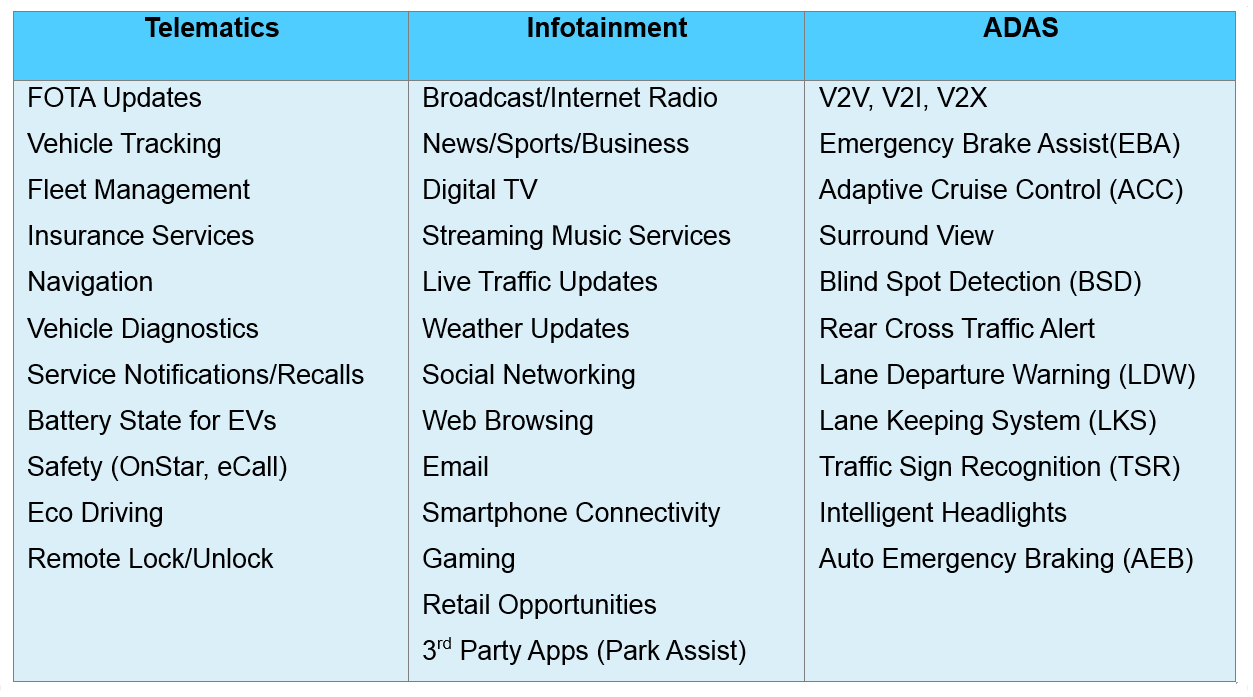
There are several different parts of a vehicle’s operation where the heightened degree of connectivity now envisaged is destined to have real value. These include: infotainment and communications; telematics; and vehicle advanced driver assistance system (ADAS).
Car makers want to provide all these extra capabilities, but given the highly competitive market they need to be able to do this in a way that doesn’t bring excessive additional costs with it. It is crucial, therefore, that testing activities do not slow down the production process or require allocation of extra engineering resources.
| Figure 2 gives further details about some of the different applications that are encompassed in each of these three areas |
Main test requirements
Though in the telecoms sector, data rates are the overriding concern, for connected cars it will be low latency and elevated reliability that matter.
Through the test equipment they have sourced, engineers need to be able to not only verify performance of the automotive wireless technologies being utilised, but in addition carry out comprehensive interference and interoperability tests. So, in addition to rapid throughput, a breadth of test parameters is basically mandatory.
Scalability is also of great importance. Testing within a laboratory scenario is just the beginning. The product lifecycle as a whole has to be adequately attended to, not just isolated elements. Once the necessary tests have been accomplished during the development phases, these activities need to be ramped up to meet mass production demands. It is important that the specified equipment is able to deal with this migration.
The role of 802.11p in connected cars
802.11p is set to form the foundation on which much of the functionality in connected cars will be constructed. This is an approved amendment to the universally recognized 802.11 WLAN standard. It deals with wireless access inside an automotive setting and will support Intelligent Transportation System (ITS) applications as they start to emerge.
Occupying the 5.9GHz frequency band, 802.11p utilises a series of 10MHz wide channels (six service channels, plus an addition channel for control purposes). The priority with this protocol is not offering a high data capacity, it is about establishing a highly reliable, low latency wireless data link.
This more deterministic technology will make it possible for vehicle-to-vehicle or infrastructure (V2V/V2I) communication to be implemented. A vehicle will be able to broadcast data relating to its current position and the speed/direction in which it is travelling. This data may then be picked up and, if necessary, acted upon by other vehicles that are in the vicinity.
Intel and Qualcomm Announce WiGig Interoperability
Qualcomm and Intel have announced interoperability between their WiGig products.
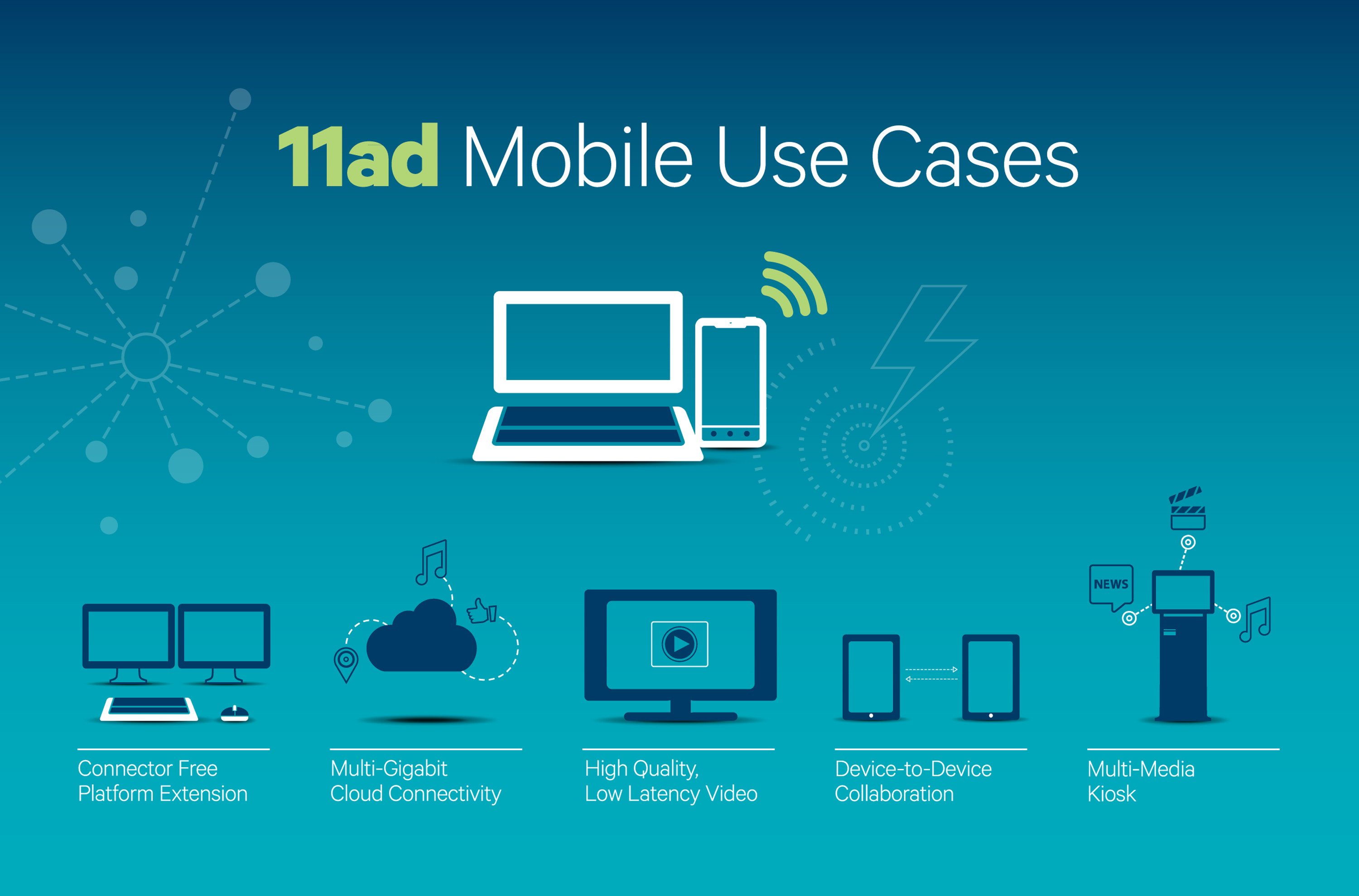
This will help pave the development of 802.11ad WiGig devices that connect at speeds of up to 4.6 Gbps.
Bringing spectrum in the 60 GHz band to Wi-Fi 802.11ad will address rising dimageata demand in homes, enterprises and carrier networks.
802.11ad enables 4K display connectivity to tri-band (2.4 GHz, 5 GHz and 60 GHz) Wi-Fi networking and high-speed cellular offload.
IoT innovation on show at Bluetooth Breakthrough Awards 2016
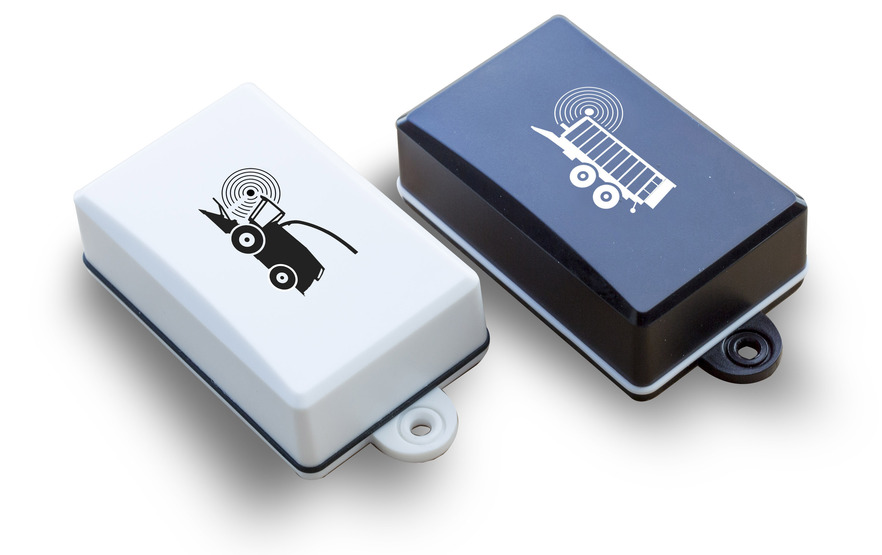
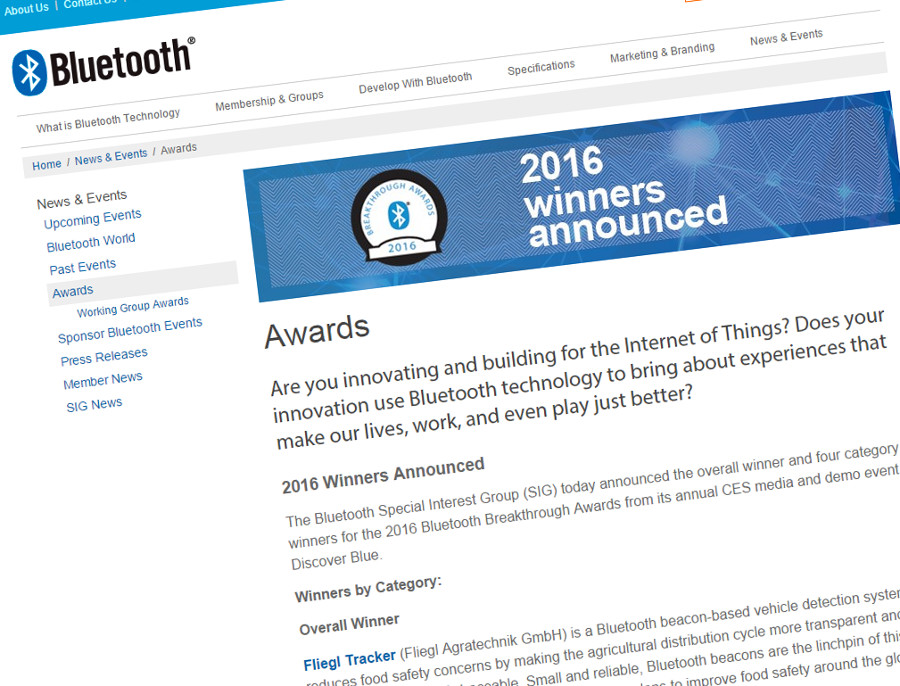
The overall winner was the Fliegl Tracker, a Bluetooth beacon-based vehicle detection system. The idea is that it reduces food safety concerns by making the agricultural distribution cycle more transparent and the production of foodstuffs traceable.
"Every year, the Bluetooth Breakthrough Awards demonstrate that the Internet of Things is not just hype. It’s real and becoming more important every day," said Errett Kroeter, Vice President of Marketing at Bluetooth SIG. "These products, applications, and prototypes represent the amazing relationships we can - and already do - create between people and technology. Our winners aren't just embracing the potential of the IoT; they're creating it with the flexibility and simplicity of Bluetooth. Just take our overall winner Fliegl for example. With a tiny Bluetooth beacon they created a product that can make our food supply much safer."
As the overall winner, Fliegl Agratechnik will be highlighted among the Bluetooth innovations driving IoT growth at Bluetooth World 2016 in March, says the SIG. And they will be receiving transportation and exhibition space valued at $12,500.
"Of course we are happy and proud of such outstanding success,"says Franz Höpfinger, development manager at Fliegl Agrartechnik, right. "Being the world’s number one, out of more than 300 submitted Bluetooth innovations that received an award, represents a great recognition for the research work that is done at Fliegl. At the same time, receiving such award motivates us to continue to be actively involved in the technological future".
Overall Bluetooth Breakthrough Winner
Fliegl Tracker Small and reliable, Bluetooth beacons are the linchpin of this IoT solution for agriculture and make Fliegl’s long-term plans to improve food safety around the globe a possibility.
Breakthrough Product Winner
ilumi LED Smartbulb (ilumi Solutions) is an advanced wireless lighting system facilitated by the effortless connectivity of Bluetooth. ilumi leverages the interoperability of Bluetooth to control lights, share lighting access with friends and family, and connect multiple lights together to cover whole home and commercial installations.
Breakthrough Application Winner
ReSound Smart App (ReSound) is the first hearing aid app with a direct Bluetooth connection between your hearing aids and your Apple Watch, iPhone, or Android device. With the secure, reliable connection of Bluetooth, you can manage and personalize your hearing experience – intuitively and discretely – with programmable settings and data sharing with your healthcare professional, further embracing the benefits of connected medical devices.
Breakthrough Prototype Winner
Bioshift (Baron Biosystems) is an intelligent gear selection system that uses Bluetooth sensors to constantly determine the optimal gear for a cyclist, in real-time, based on their specific athletic characteristics and needs. The power efficiency and dynamic capabilities of Bluetooth make it possible for Bioshift to provide the ideal cycling experience.
Breakthrough APAC Region Winner
Easy Sous-vide (KitchBot) is a Bluetooth enabled thermometer that allows you to control temperature and monitor cook time of your rice or slow cooker from your smart phone, making a delicious home cooked meal a reality for everyone. With a simple Bluetooth connection, anyone can perfectly braise meats or prepare seafood without expensive specialty equipment or years of cooking experience.
The awards also included a student category, and you can read more information on the student finalists at: http://blog.bluetooth.com/meet-the-next-generation-of-bluetooth-pioneers/
And full details on all the winners on the Bluetooth SIG website
What are your thoughts? Leave a comment via the link below.
aptX HD brings 24-bit Audio Over Bluetooth
This one caught Gadget Master’s eye – or should I say, ear? – as I remember hearing about aptX for the first time at a CSR audio demo a couple of years ago. Anyway, Qualcomm has officially unveiled aptX HD, an enhanced version of the codec that offers 24-bit music data, over low-power wireless links, compared with the 16-bit (“CD-quality”) of the original aptX.
The original CSR VibeHub demo, back in 2014, was effectively a CES Preview, and the latest Qualcomm announcement was also timed with CES 2016 in mind.
"Today consumers enjoy the benefits and freedom of wireless audio on the wide variety of aptX enabled devices available but demand for higher resolution audio is growing to fulfil the desire for the most premium listening experience possible," said Anthony Murray, general manager, Qualcomm Technologies International. "With aptX HD, we are helping device manufacturers to reduce development time and quickly meet demand."
CSR8675
aptX HD is immediately available as part of the CSR8675 Bluetooth audio SoC, says Qualcomm (which bought CSR last October). The chip features:
- Integrated high performance stereo DAC & ADCs
- 24 bit digital audio support
- 2 x I2S interfaces
- 1 x SPDIF interface
- 2 x additional GPIOs (over CSR8670)
- Bluetooth v4.1 support
- 16Mb internal eflash and up to 64Mb external serial flash
- 6 x Capacitive touch sensor inputs
- Up to six digital microphone inputs
- Support for ANC feed-forward architecture
A diagram of the chip is pictured, above right.
The same challenge remains, of course: sending high quality audio wirelessly over Bluetooth by compressing the large audio files so that they can be transmitted through the wireless pipeline without affecting the listening experience quality. With low power usage.
Qualcomm says the new codec retains backward compatibility with all Bluetooth devices containing 'classic' aptX.
You can read more about aptX HD on the Qualcomm website - Introducing aptX HD: meeting the need for hi-resolution wireless audio.
As well as accepting a 24-bit audio input, 24-bit audio resolution is maintained by using an extra two bits in each of the four sub-bands of processing. This results in lower signal-to-noise ratio (the signal strength relative to background noise) through the encode/decode cycle and less distortion, making aptX HD ideal for use as part of a high-resolution audio solution.
SVS
Just to be precise, CSR itself acquired the technology, buying the Belfast-based audio codec firm APT Licensing back in 2010.
Interestingly, the audio coding algorithm originated from PHD research at Queens University Belfast by Dr. Stephen Smyth in the late 1980's and was adopted by Hollywood and the radio industry.
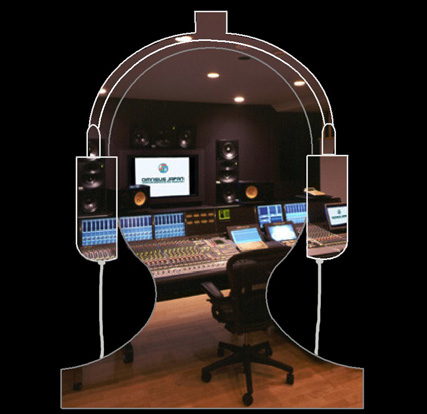
More recently, in 2004 he setup Smyth Research LLC to promote and market the SVS algorithm, his latest invention. This is described as "A revolutionary audio process that emulates, in headphones, the complete experience of listening to actual loudspeakers in an actual room, in up to eight-channel surround sound."
The emulation includes the precise localisation of all the speakers in the room, the room acoustics, and the response of the speakers and all electronics in the emulated system.
The emulation is essentially perfect, meaning that in immediate A/B comparison between the actual speakers and the headphones, listeners say the two are indistinguishable.
Products include the Smyth Realiser A8.
High Def Bluetooth audio
Getting back to High Def Bluetooth audio, a couple of interesting reads can be found here (Can aptX give you better sound over Bluetooth?) and here (Does Bluetooth Audio Still Suck?) for the interested.
What are your thoughts on Bluetooth and high-quality audio? A contradiction in terms? Or are you a convert, perhaps? Leave a comment below.
Sony films 360 degree video with Xperia Z5 devices
In a post on the official Sony blog, Anthony Devenish writes:
The short film is the result of an ambitious, creative R&D experiment, where each Xperia Z5 Compact device was mounted on a custom 3D printed rig. We set about capturing scenes from the slopes, including freestylers performing jaw dropping tricks in the park, high-speed racers on a giant slalom course and the stunning panorama looking out across some of the Alp’s best known peaks. The footage from each phone was edited together to create our first 360 degree video, showcasing the unique capabilities of Xperia Z5’s camera technology.
Remix OS Plays Android on The Desktop
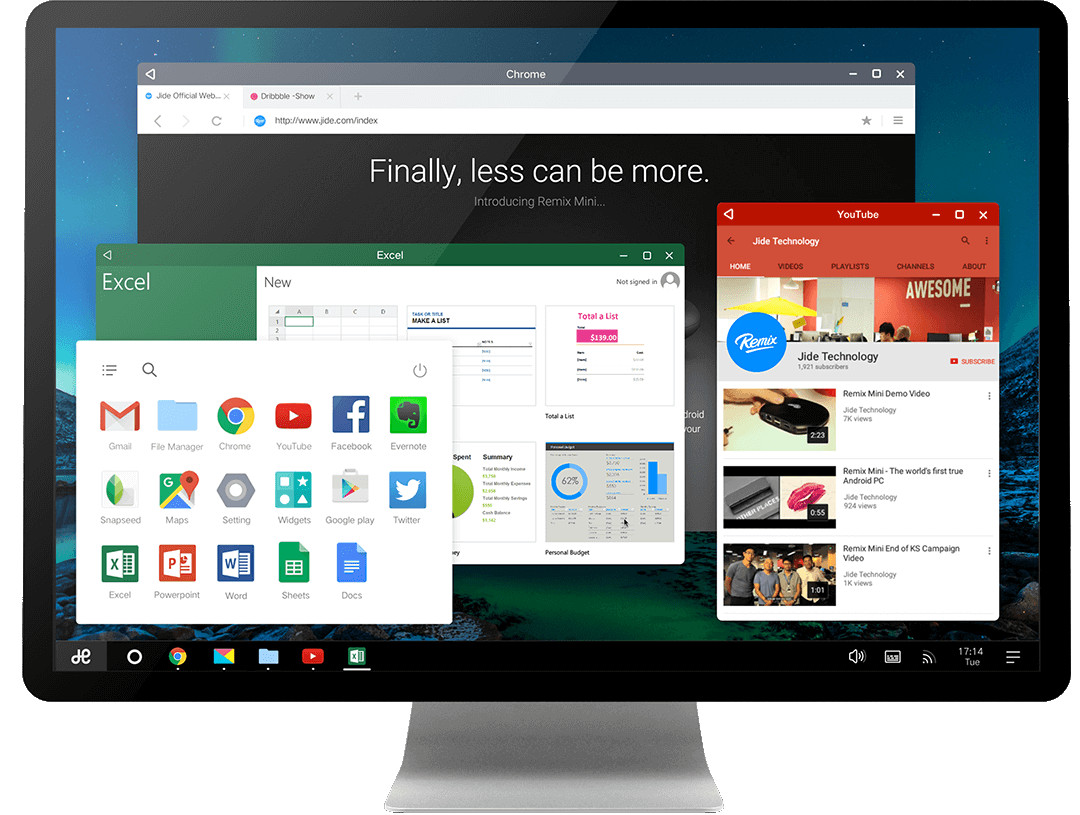
With software giant Microsoft still desperately trying to win the favour of mobile users with the latest Windows 10 – which launched in late July last year – Android, the world’s most used mobile OS, is looking to encroach on the company’s coveted PC market. And this time it is not Google at the helm, writes Tom Wilson.
After an initial release of Remix OS on its own hardware, the Jide Ultratablet, Remix OS has now been made available to 64-bit PC architectures, with an official alpha release available from the company's website.
Although Android has been shown to run, in some cases fairly well, on x86 PC architectures through the Android-x86 open source project, Remix OS marks the first time a dedicated hardware and software company have delivered an x86 version of Android in an official release.
By adding a task bar, implementing multi-window app functionality and offering a full file manager built into the OS, Remix does begin to feel distinctly familiar to any PC user.
Along with these additions, familiar Android features such as a notification centre (see right) and access to Google's Play Store may make this variant of the OS an attractive option to many consumers wishing to get that little bit extra from their tablet.
Having personally trialled the software on my Microsoft Surface Pro over the past week, Remix OS is a refreshing change from the mainstream variants of Android, offered by the likes of Samsung, Sony and LG.
The addition of multi-window app functionality is particularly welcome, and the tweaked interface is slick and easy to navigate using a mouse and keyboard.
There are of course a number of shortcomings. The software is still in Alpha and hardware support is patchy (in my trial both Wi-Fi and Bluetooth were absent) and apps do take getting used to when navigating the interface with a mouse. However, Jide themselves seem focused on Remix OS and have offered a number of updates to the software since its official release on Monday 12 January.
Furthermore, their Android-on-PC efforts do not simply stop with Remix OS as they recently announced the Remix Mini, a palm sized desktop device, at the Consumer Electronics Show in Las Vegas earlier this month.
The official version of Remix OS can be downloaded free of charge from the company's
website: www.jide.com/en/remixos-for-pc
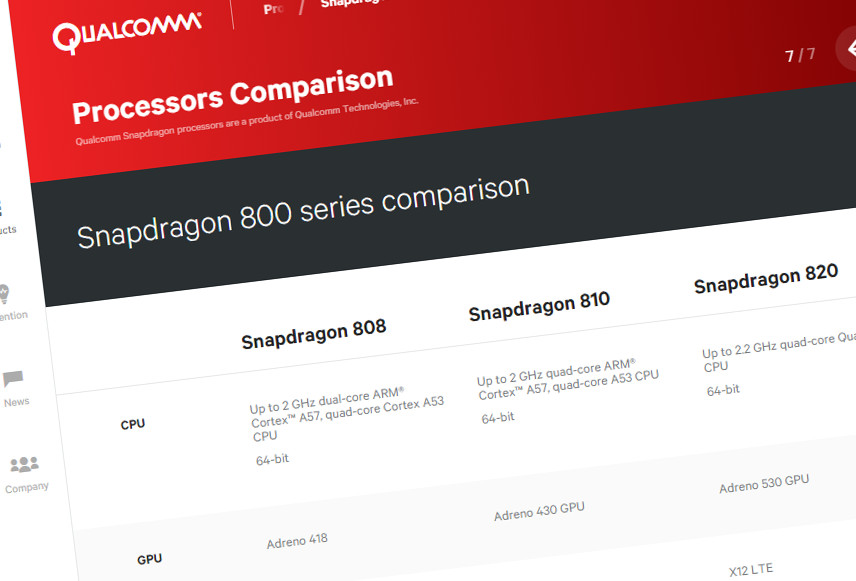
Qualcomm Snapdragon Series Comparison
See the Snapdragon series comparison. It covers all the 800, 600, 400 and 200 series.
You can drill down on the modem characteristics, GPU, video/audio capture and playback, maybe see the detailed details of your own phone's SoC...
You can also compare modems (X5, X6, X7, X8, X10, X12) and processors (S4 Play, S4 Plus, S4 Pro).
Smart home reference platform
Reversing slightly, interested in the Snapdragon 212 smart home reference platform, based on the 212 Processor? The company highlights the following:
Display
"The display interface supports resolutions up to 1280x800, frame rates up to 60 frames per second in a QHD format, and includes an 8MP camera with up to 1080p video playback. That means greater options for cover art displays, on-device UI settings, and always-on content like weather, clock, alerts and emergency notifications."
Audio
"The smart home reference platform incorporates Hi-Fi smart audio technology, which means users can rethink the relationship between their smart homes and their music collections. With up to 24-bit/192-KHz playback and low-power DSP playback offload, users can also enjoy streaming high-quality audio without draining their battery."
Voice Recognition
"With Fluence Pro voice recognition and input tech, the smart home reference platform is perfect for developing for smart speakers, control hubs, and many other devices. Keyword voice wakeup allows users to issue voice commands, while echo cancellation and noise suppression help eliminate unwanted sound that might hamper a voice-controlled smart home. Meanwhile, sound focus and position tracking frees consumers to interact with their devices regardless of their location in the home."
You can see other CES 2016 announcements here »
Google’s fingerprints On Android Marshmallow
Pixel, Nexus, Chromecasts
Runtime permissions
Runtime permissions give your app the ability to control when and with what context you'll ask for permissions. This means that users installing your app from Google Play will not be required to accept a list of permissions before installing your app, making it easy for users to get directly into your app. It also means that if your app adds new permissions, app updates will not be blocked until the user accepts the new permissions. Instead, your app can ask for the newly added runtime permissions as needed.
Fingerprint API
Bluetooth Developer Studio Targets Smart Wireless Connectivity
This a free development environment for developers get to grips with Bluetooth technology, aiming to cut developer learning time for Bluetooth technology and speed product development.
It makes building for the IoT simple for developers, from the novice to the experienced, boasts the SIG, in terms of adding smart wireless connectivity.
"The Bluetooth Developer Studio arms developers with an all-in-one, cost-efficient, and easy-to-use tool to turn their ideas into reality. With it, they can create products and applications that make our lives easier, better, smarter," said Steve Hegenderfer, director of developer programs, Bluetooth SIG.
"With Bluetooth Developer Studio, not only will we see more smart gadgets enter the market, we will see quality products that 'just work', delivering the IoT experience consumers actually want."
The devkit includes tutorials and code samples, with drag and drop functionality for a variety of Bluetooth use cases, and there are IDE functions such as auto-completion and auto-generation of code and support for virtual device testing.
You can generate code to create and manage your Bluetooth GATT profiles or services, for example.
The kit also supports the use of plugins, for example:
The Android Client plugin (from the SIG) - Generates an Android application which implements the GATT client part of the selected profile, complete with basic user interface.
The Android Profile Validator (again, from the SIG) - Generates an Android application which can connect to a device which has implemented the selected profile and validate the implementation against the profile design.
The software has been available in a beta-prgramme since April 2015.
For more information and to download Bluetooth Developer visit
www.bluetooth.com/developer-studio.
You can also find more developer support at https://developer.bluetooth.org.
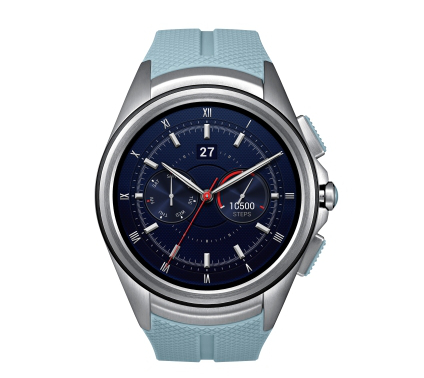
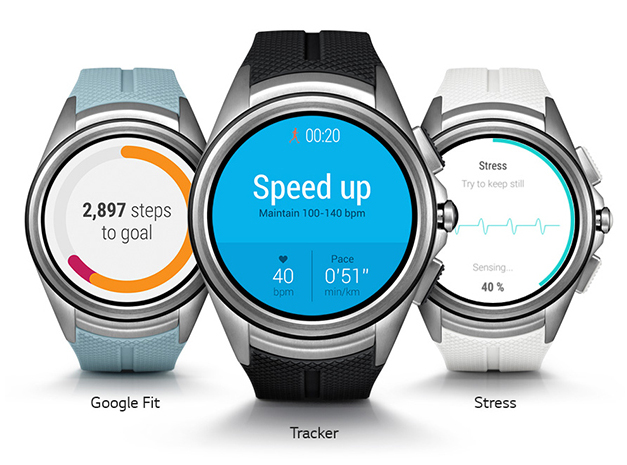
The interactive watch face of LG Watch Urbane 2nd Edition provides quick responses to user interactions, with its colorful and easily noticeable display designs. You can choose the graphical elements to make it stylish and functional at the same time. In addition, tons of diverse watch faces are now available at Google Play Store.
Qualcomm’s Tune-up Kit Promises One Touch App Profiling
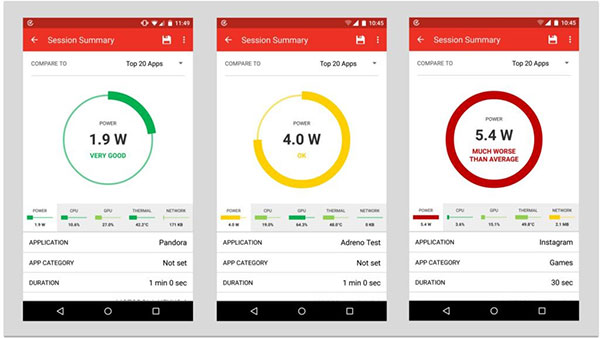
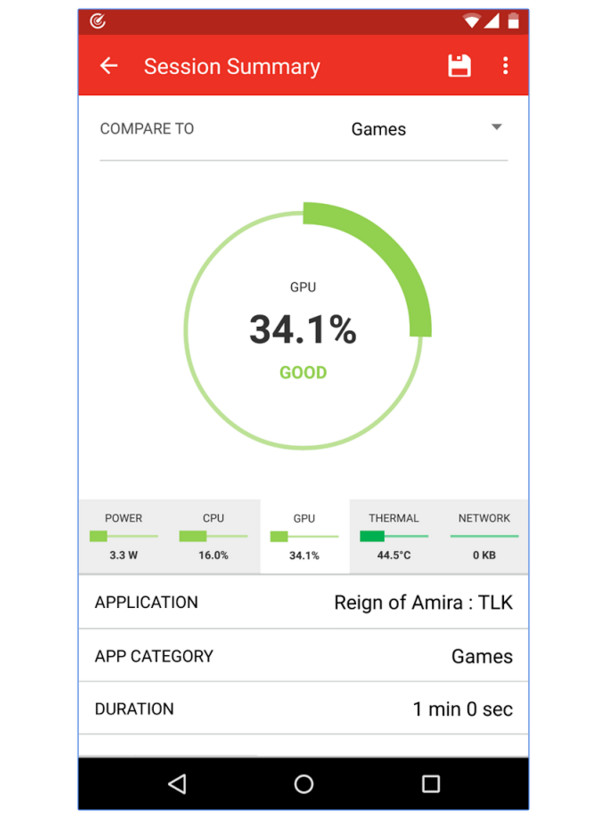
It's described as a "One-Touch Application Profiling" tool that works in 60 seconds.
Qualcomm's App Tune-up Kit
Qualcomm writes:
App Tune-up Kit combines our years of experience in profiling with the most common questions about app performance to come up with a tool that’s easy to use. It also rolls up detailed information that software developers would otherwise spend hours or even days trying to collect and organize themselves.
There are ads, analytics or data collection involved, says the company.
The latest version - released in November - has these changes:
- A Get Recommendations feature ("Provides custom-tailored suggestions to help developers make better apps. This is a beta feature that will improve over time.")
- Session descriptions ("The name of the profiling session now appears in the Compare Sessions report. This allows you to include descriptive info when you save your sessions.")
- Access the Navigation drawer from the Session Summary dashboard.
- Tapping a truncated text string on the Compare Sessions report displays the full text string.
- Shortened the default prefix of saved session files to "ATUK_"
- Added symbols and footnotes to the Dashboard screen ("to indicate when a data point was unsupported and has fallen back to a secondary data point for ratings")
- Lowered the temperature warning threshold from 60C to 55C
- Removed some of the decimal points in all reports to avoid truncation
- Updated text on the About screen and EULA
It requires Android 4.0 and up.
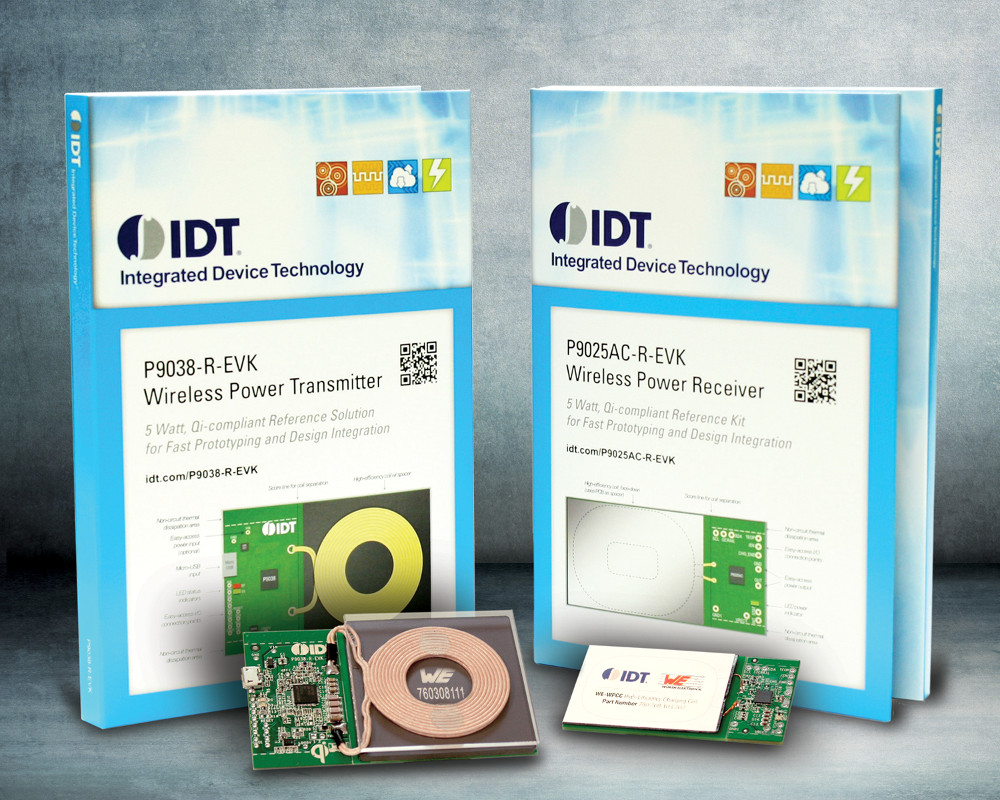
Wireless Power Reference Kits Underpin New Competition
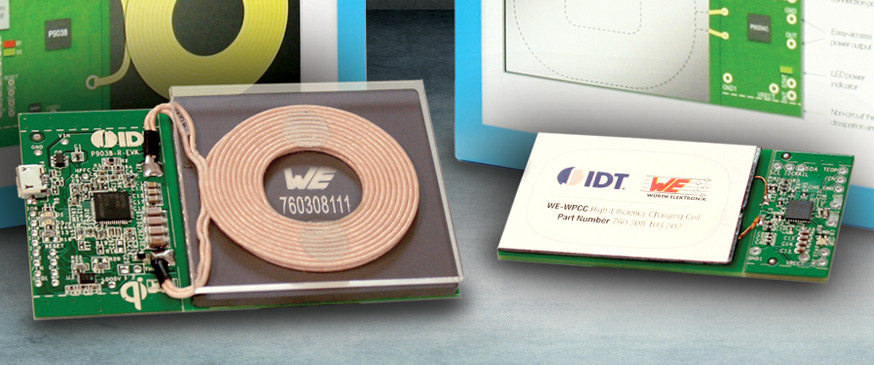
It's to create wirelessly powered devices using IDT’s wireless power reference kits for creative market applications. The companies have invited electronics experts and hobbyists to find creative ways to incorporate wireless charging capability into products using IDT’s 5W kits.
Sponsored by global components distributor Digi-Key Electronics, the theme of the contest is, ‘Power Without Borders’.
Interested? Judges will be looking for designs that demonstrate the advantages of wireless charging, such as convenience, the ability to develop a waterproof charging system, or the elimination of failure-prone charging contacts.
The deadline for submitting designs is 31 December and the winners will be announced on 15 February 2016.
The winner will receive a Samsung Galaxy Note 5 or Galaxy S6 edge+, plus a Gear S2 Smart Watch. Second and Third place winners also will receive Samsung products featuring wireless charging enabled by IDT chips.
The contest will be hosted by the hardware creation community, hackster.io at
www.hackster.io/IDTWirelessPower.
“IDT’s wireless power kits dramatically simplify integrating wireless charging capabilities into an existing design - so much so that even engineers without specific power design expertise can create a functioning prototype within hours,” said David Sandys, Digi-Key director of technical and strategic marketing.
“These kits were developed for the mass market,” said Mario Montana, IDT vice-president and chief sales officer. “With this contest, we’re asking today’s innovators from around the world to unleash their creativity and develop entirely new sets of applications that can be wirelessly powered, whether it’s an electric shaver, one of your kid’s toys, or even a battery-operated back-scratcher. Your imagination is the limit.”
Li-Po battery powers Arduino MKR1000 for IoT
Welcome the MKR1000, and yes there's an IoT focus. According to the Arduino team it's a board that combines the functionality of the Zero and the connectivity of the Wi-Fi Shield.
"It's based on the Atmel ATSAMW25 that is part of the SmartConnect family of Atmel Wireless devices, specifically designed for IoT. It offers the ideal solution for makers seeking to add Wi-Fi connectivity with minimal previous experience in networking."
The 32-bit ARM runs at 32KHz, and the board supports 8 digital I/O pins, 7 analogue input pins (adc 8/10/12 bit) and 1 analogue output pin (dac 10 bit). There's 256KB of Flash memory and 32KB of SRAM, and for comms it supports 2.4GHz IEEE 802.11 b/g/n Wi-Fi. You can see the full tech spec below.
This board has been designed to offers a practical and cost effective solution for makers seeking to add Wi-Fi connectivity to their projects with minimal previous experience in networking."
The design includes a Li-Po charging circuit that allows the Arduino/Genuino MKR1000 to run on battery power or external 5V, charging the Li-Po battery while running on external power. Switching from one source to the other is done automatically."
About the Atmel SoC at the heart of the system, the Arduino team writes:
Arduino MKR1000 is based on the Atmel ATSAMW25 SoC (System on Chip), that is part of the SmartConnect family of Atmel Wireless devices, specifically designed for IoT projects and devices. The ATSAMW25 is composed of three main blocks:
• SAMD21 Cortex-M0+ 32bit low power ARM MCU
• WINC1500 low power 2.4GHz IEEE 802.11 b/g/n Wi-Fi
• ECC508 CryptoAuthentication
The ATSAMW25 includes also a single 1x1 stream PCB Antenna.
Arduino Maker Challenge
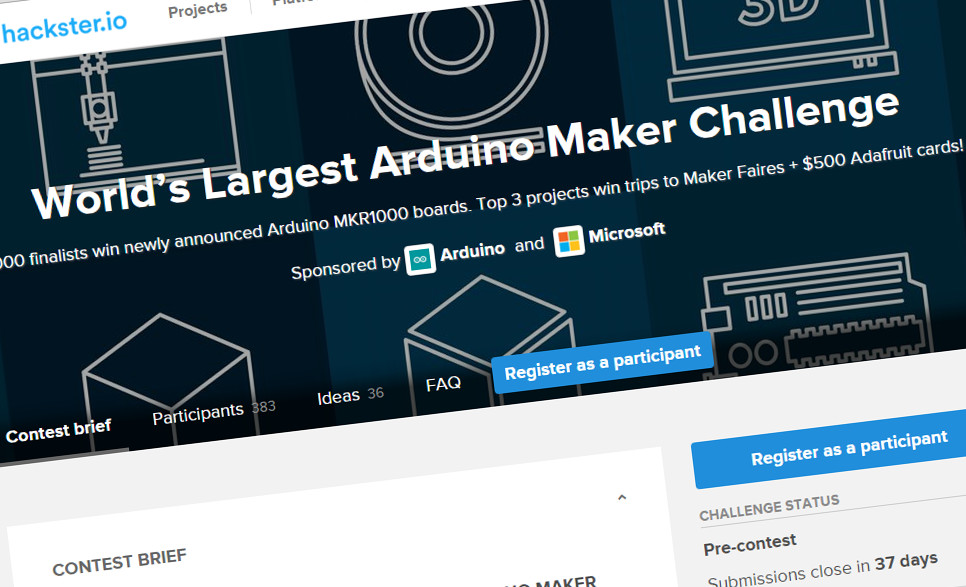
As part of the launch for the MKR1000, Arduino is running a competition with Microsoft on hackster.io - The World’s Largest Arduino Maker Challenge - for a chance to be one of a thousand winners of the new MKR1000 board.
"The contest is very flexible - choose anything you want to build from environmental sensors to gaming, augmented reality, robotics or UAVs using the power of Arduino.cc boards and Windows 10."
The contest started yesterday, 9 December 2015. Idea submissions close on 15 January 15, 2016.
As well as a board, three finalists submitting the best completed projects will be rewarded with: "a fully-funded trip to Maker Faire Shenzhen, New York or Rome; a chance to present their creation at the Microsoft and the Arduino and Genuino booths; a professional video production of the project; and a whopping $500 gift certificate to Adafruit".
The new board will be available for purchase from February 2016.
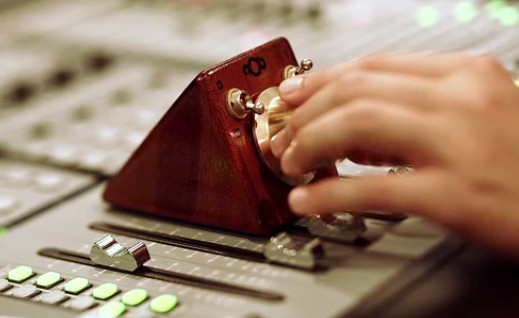
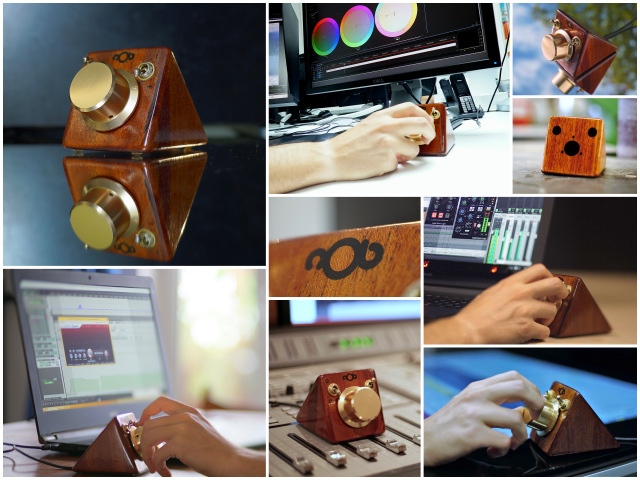
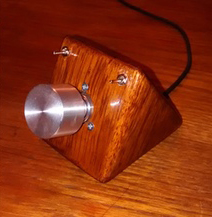
A control nOb For All Your Devices
This is the premise of the nOb, a project on KickStarter. From analogue to digital. There are also two switches for further control and tweaking.
Flick a switch, and twist the dial, but not too much...
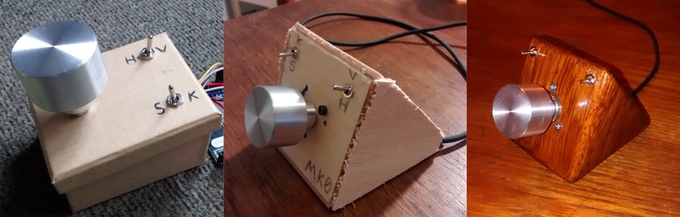
There's adjustable rotation resistance for the aluminium knob, and a "very precise industrial grade encoder" supports up to 2,400 ticks per revolution of the dial.
Apparently it is primarily aimed at those working in media production, mixing and mastering...
By intelligently emulating a Human Interface Device (NOT simply implementing a mouse scroll wheel), nOb is able to control virtually any parameter you would normally adjust with your mouse, delivering out-of-the-box compatibility with any operating system and software package. You simply have to point your mouse cursor to the parameter you want to control and use nOb's big knob to fine-tune it to taste. Based on the current mode of operation, any draggable interface element found in modern media production software can be controlled, including sliders, scrollbars, knobs or even draggable value indicators."
- Flip a switch to reverse drag direction of
- Double tap the knob to undo or redo last action
- Flip a switch to jump beweetn screen elements fo your choice
The makers say it can work with any programme or any OS. It works with Windows, Macs, Linux and Android out of the box.
It comes with an open serial interface, say the creators, so they hope developers will write software to customise nOb's functionality. Also, they say all hardware parts can be unscrewed and taken apart, allowing for hacks and other modifications.
At time of writing it has raised more than $30,000 towards a $52,000 goal, with 44 days to go.
I don't know quite what to make of this this. It wouldn't be of use to me, but it was flagged for attention by our Technology Editor, Steve Bush, which certainly makes it of interest.
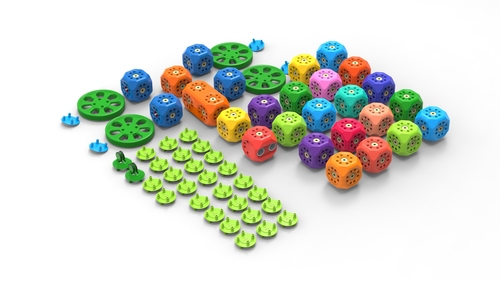
Plays Modular Robots With Robo Wunderkind
What caught my eye is the system supports the MIT-developed Scratch programming system, which first came to my attention via its presence on the Raspberry Pi.
You can read more on their website www.startrobo.com.
From a launch on 21 September, the project successfully raised $246,00 on KickStarter at the end of October, and you can place pre-orders for three kit variations: Starter Kit (9 Modules for $149.99), Advanced Kit (15 Modules for $299.99) and Professional Kit (25 Modules for $599.99).
If you are interested in this for your kids, you could also check out systems from the likes of littleBits, LEGO Mindstorms, SAM blocks and Sony Mesh tags, among others.
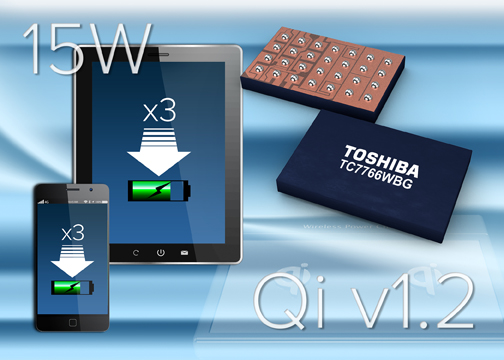
Toshiba launches single-chip Qi vi1.2 15W Receiver
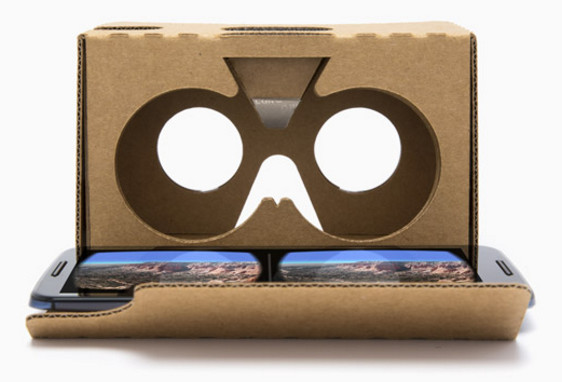
Cardboard Camera Breathes VR life Into Smartphone Photos
I must be honest. I’ve never used the Google Cardboard camera myself, or seen it in action, and I’m not a particularly keen advocate of Virtual Reality. Which kind of explains my scepticism about Google’s low-cost device.
But I do salute its low-fi approach and potential ingenuity, and it does seem a good fit with Gadget Master. More importantly, there is new functionality with the new Cardboard Camera app for Android.
Apparently you now just have to move your phone in a circular fashion and when the photo is later seen inside the viewer it will come to life as a "VR photo", according to Google.
These are described as "three-dimensional panoramas" with slightly different views for each eye. The idea is that near things look nearer and far things further distant. The key point is that you can "look around" to explore the image in multiple directions.
Carlos Hernandez, Software Engineer for Cardboard Camera at Google introduces the app on the official Google blog. He writes:
Cardboard Camera turns the smartphone in your pocket into a virtual reality (VR) camera. It’s simple to take a photo: just hold out your phone and move it around you in a circle. Later, when you place your phone inside a Google Cardboard viewer, you'll get to experience something new: a VR photo.
You can find the Cardboard Camera on Google Play. It requires Android 4.4 and up.
The Next Generation of Portable Camera
Technology advances ever onward, and one of the latest devices to be born from the imagination of the engineers at HIMS is the E-bot.
The E-bot is a portable CCTV camera designed to be connected via HDMI to a television or monitor - so far so normal. What sets the E-bot apart is that it can also wirelessly connect to an iPad, using the iPad's screen as its monitor!
In another twist, the most advanced version of the E-bot, the E-bot Pro, is fully motorized and allows control of the camera through either swipe and touch gestures directly on the iPad screen, or with the included remote control. This is fantastic for making fine adjustments when magnified and makes it possible to use the camera from beyond arm's length as you don't need to touch the camera in order to move it.
The E-bot comes in three models, with the E-bot Pro being the most fully featured. The E-bot Pro, in addition to the motorized movement, offers great OCR, distance viewing, near viewing and superb portability due to its fold-away design.
Look out for a video on the E-bot very soon, and in the meantime read more about the device here http://hims-inc.com/products/e-bot-pro/


Join The Community